Self-Service Device Branding Methods
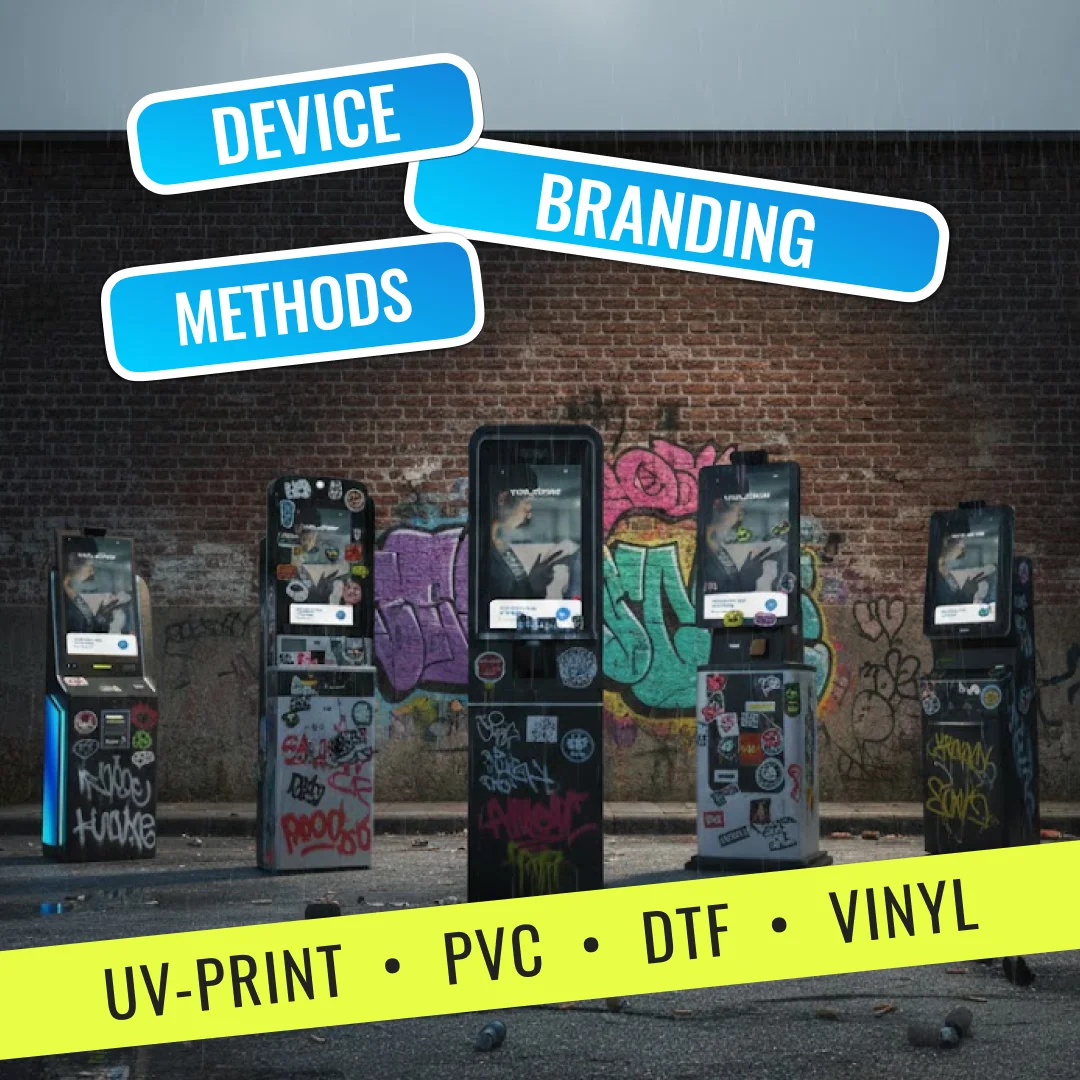
Self-Service Device Branding Methods: UV Printing, PVC, DTF and Vinyl Stickers
Branding of self-service devices is not just about visual appearance. The selected branding method directly affects durability, resistance to external impact, service life, and the ability to update the design in the future.
When manufacturing self-service kiosks, payment terminals, and other interactive devices, it is essential to consider operating conditions, vandal resistance requirements, and surface characteristics of the device housing. Below are the main branding methods and their key features.
UV Printing on Device Housing
UV printing is a direct ink application method followed by curing under ultraviolet light. The image is printed directly onto the device surface without using intermediate materials.
This branding method is suitable for self-service devices that require maximum durability and long-term visual stability.
Advantages of UV printing:
· high vandal resistance;
· resistance to external environmental factors;
· ability to apply separate design elements without a background.
Disadvantages of UV printing:
· rebranding requires repainting the device housing;
· applicable only to flat and low-profile surfaces;
· not suitable for curved or radius surfaces.
PVC Stickers for Device Branding
PVC stickers are produced using UV printing on a PVC substrate and then mounted onto the device housing using an adhesive base (such as 3M tape or equivalent).
This method is often chosen when durability is required together with the possibility of easy replacement.
Advantages of PVC stickers:
· vandal resistance;
· resistance to external influences;
· easy replacement when updating branding.
Disadvantages of PVC stickers:
· limited thickness of the sticker;
· not suitable for curved surfaces;
· presence of a background layer.
DTF Stickers (Film Transfer Method)
DTF stickers are created using UV printing on a transparent adhesive film. The image is then transferred from the film to the device housing and fixed on the surface.
This method allows the application of separate branding elements without a background but requires careful surface selection.
Advantages of DTF stickers:
· easy replacement of branding elements;
· application of individual elements without a background.
Disadvantages of DTF stickers:
· possible bubbling or peeling on textured surfaces;
· not suitable for curved surfaces;
· low resistance to mechanical impact (keys, fingernails, etc.).
Vinyl Stickers (Oracal)
Vinyl stickers are printed on Oracal vinyl film and applied to the device housing using the application method. This branding option is suitable for complex shapes and curved surfaces.
However, compared to other branding methods, vinyl stickers have lower durability and a less premium appearance.
Advantages of vinyl stickers:
· application of separate elements without a background;
· suitable for curved and bent surfaces;
· easy replacement.
Disadvantages of vinyl stickers:
· possible bubbling on textured surfaces;
· edges may peel over time;
· fading under long-term exposure;
· less premium appearance compared to other methods.
How to Choose the Right Branding Method
Choosing the appropriate branding method for self-service devices depends on project goals, operating environment, and durability requirements. High-traffic and outdoor locations require more robust solutions, while indoor installations allow more flexible options.
By ordering self-service kiosks from Mastersky Group, you receive not just hardware but a professionally selected branding solution tailored to operating conditions, durability requirements, and brand perception.