Self-service market trends: how global brands adopt automation
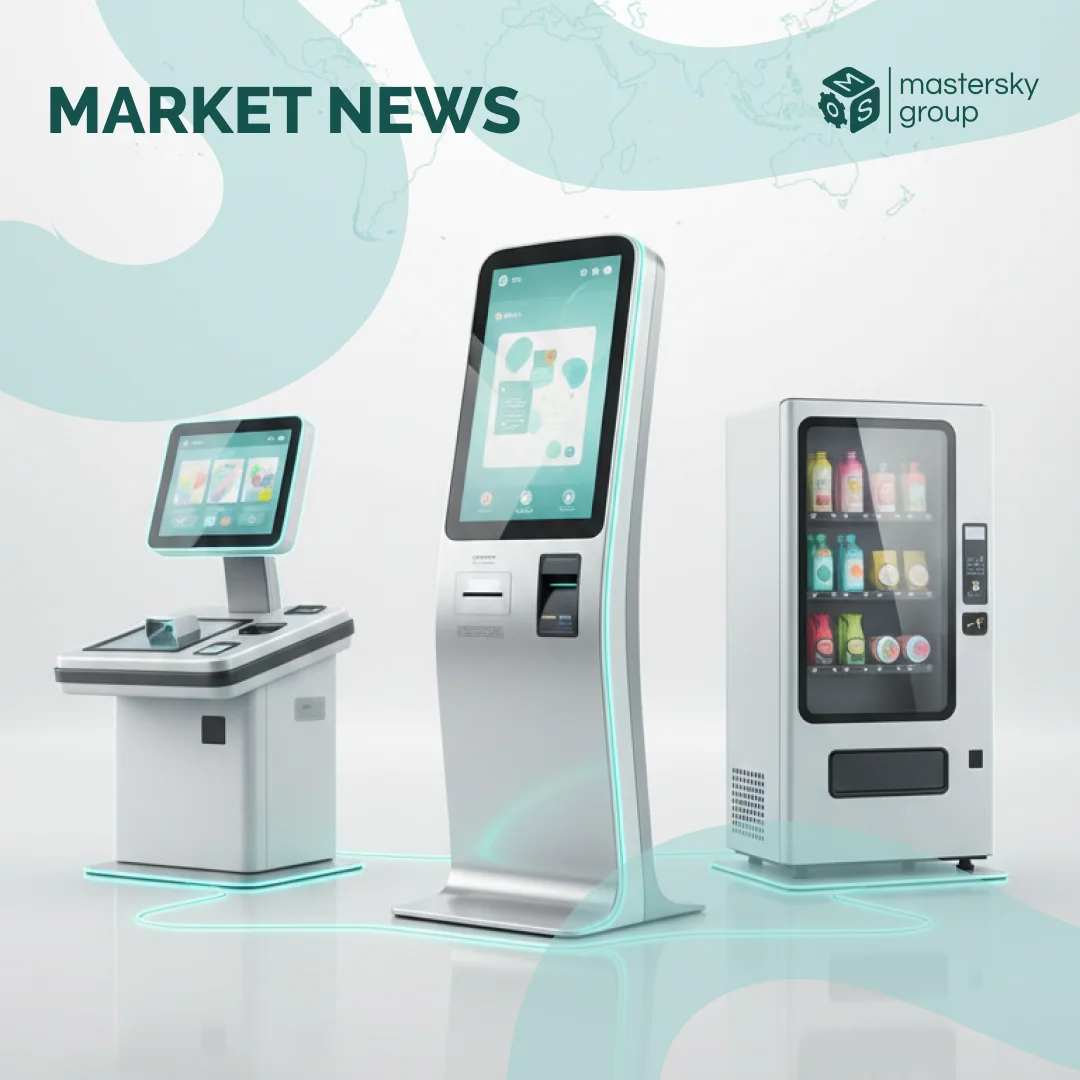
Self-Service Market Trends: How Global Brands Adopt Automation
The self-service market continues to grow rapidly as automation becomes a standard across multiple industries.
Retail, HoReCa, transportation, culture, and telecommunications are increasingly adopting self-service kiosks, self-checkout systems, and vending solutions to improve efficiency and customer experience.
Below are key market cases that clearly demonstrate how automation is reshaping modern service models.
Self-Service as a New Sales Channel
Starlink has introduced its first vending machine for selling satellite internet terminals and accessories.
Using the self-service vending machine, customers can:
· purchase equipment,
· activate connectivity immediately,
· avoid visiting a physical retail store.
This format is positioned as an alternative to traditional offline retail, especially in regions with limited infrastructure.
It marks Starlink’s first experience using self-service as a direct sales channel, not just a supporting solution.
Full Automation in HoReCa
McDonald’s is testing a fully automated restaurant concept in Texas.
Key features of the model include:
· ordering via self-service kiosks or a mobile app;
· food pickup through an automated conveyor system;
· minimal staff involvement.
As a result, service speed increased by approximately 30%.
Global brands are steadily reinforcing self-service as the new operational standard in the HoReCa sector.
Digital Ticketing Systems for Cultural Sites
Automation is also transforming cultural and historical spaces.
The Egyptian Ministry of Tourism is implementing digital ticketing systems across major cultural landmarks.
The solution includes:
· ticket purchases via self-service terminals,
· QR-code access,
· cashless online payments without traditional ticket offices.
The system is already operating at more than 110 locations, including museums in Sharm El Sheikh, Hurghada, and the Alexandria National Museum.
Even historic venues are embracing self-service technologies to enhance visitor convenience.
Self-Checkout Systems in Retail
Fix Price has launched a large-scale rollout of self-checkout systems in Kazakhstan.
In Almaty and Astana:
· 59 stores were modernized,
· self-checkout kiosks were installed,
· LED screens were added for promotional content.
According to Fix Price and ROMIR, 80% of customers prefer self-checkout due to faster service.
Retail chains across the CIS region continue to actively invest in automation.
AI-Powered Self-Checkout as a New Retail Standard
U.S. supermarket chain Weis Markets has deployed AI-powered self-checkout systems in nearly 200 stores.
The solution offers:
· automatic recognition of fruits and vegetables,
· detection of suspicious activity,
· faster scanning and payment processes.
Today, 94% of customers use the new self-checkout systems daily, demonstrating strong adoption and trust in AI-driven automation.
Self-Service Solutions in Transportation Infrastructure
At Yekaterinburg Koltsovo Airport, self-service terminals for passenger check-in and baggage drop have been launched.
Passengers can now:
· check in independently,
· print boarding passes,
· print baggage tags,
· drop off luggage without staff assistance.
The terminals operate up to 6 hours before departure and support nine airlines, reducing queues and operational workload.
Conclusion: Where the Market Is Heading
Self-service solutions are no longer optional.
Today, they deliver:
· faster service,
· lower operational costs,
· consistent customer experience,
· scalable business models.
Companies that implement self-service kiosks, self-checkout systems, and automated solutions today gain a clear competitive advantage for the future.